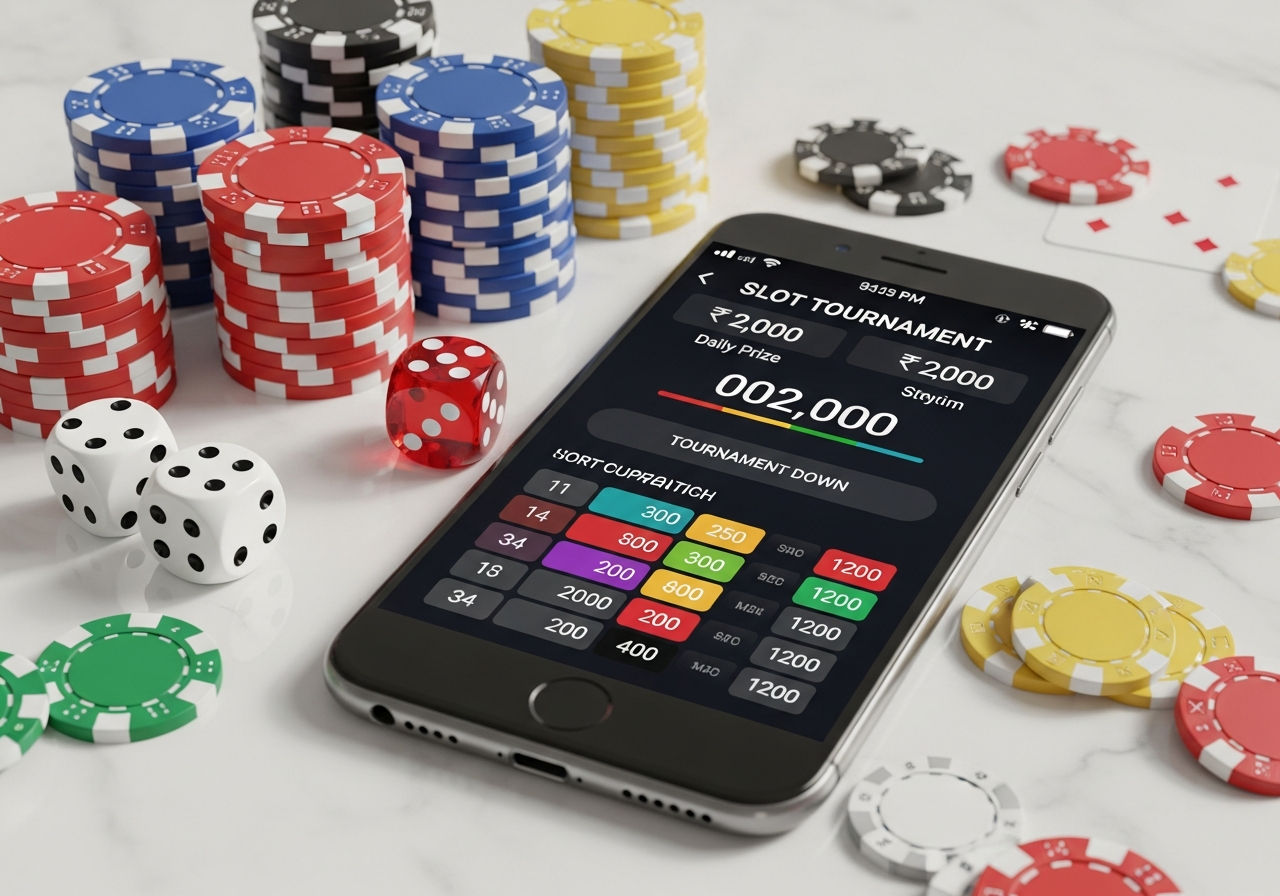
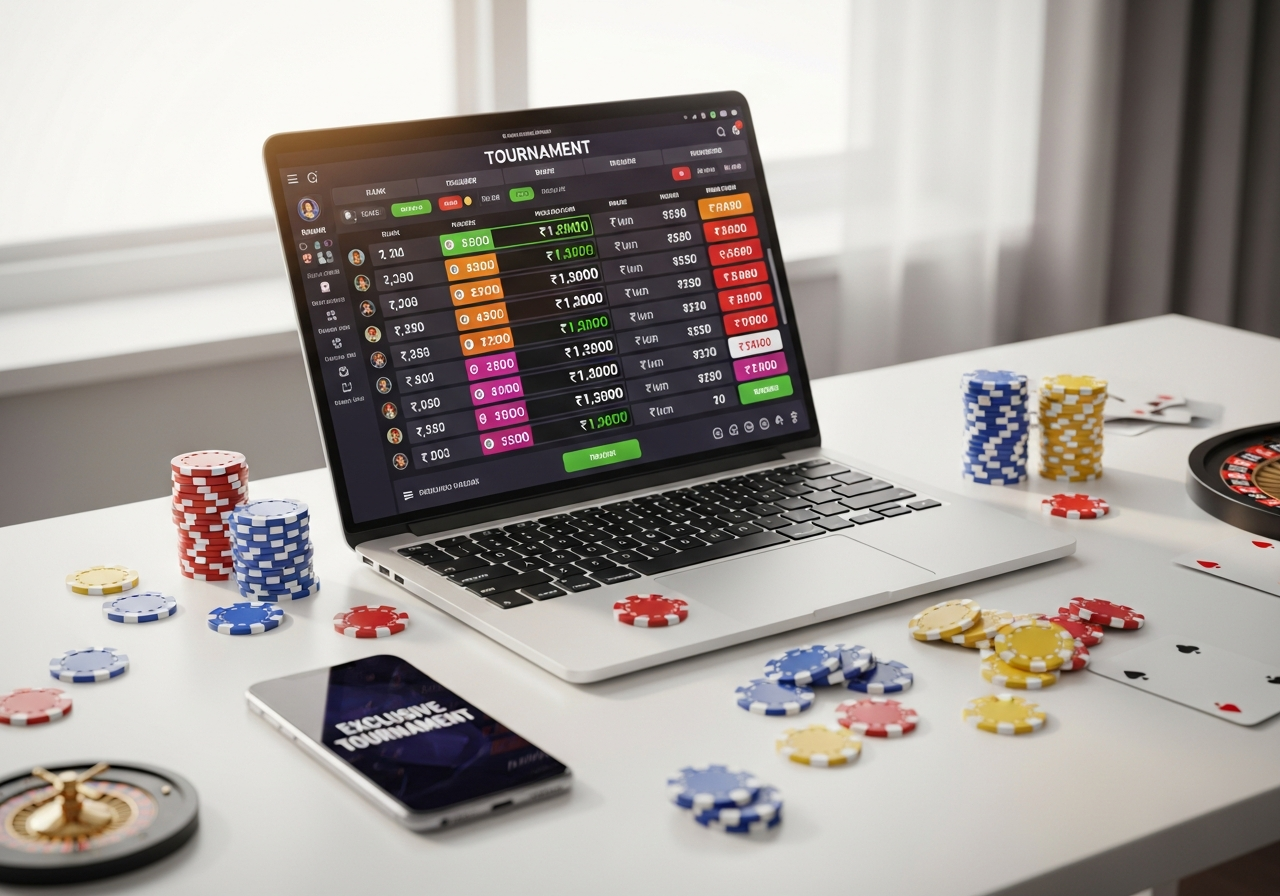
Slot tournaments have exploded across global online casinos over the past decade, transforming casual spinning into competitive, community-driven entertainment. From daily leaderboard races to epic multi-week series culminating in prize-pool finals, tournaments now form the backbone of player engagement strategies for major operators worldwide. For Indian casino players, this boom represents unprecedented access to structured competitions that blend familiar gaming with real prize potential—all playable from home via mobile devices, desktops, or tablets.
Yet “exclusive” slot tournaments remain poorly understood by many Indian players. Exclusivity doesn’t always mean high stakes or membership-only clubs; it often refers to limited-access events gated by bonus codes, VIP loyalty tiers, affiliate partnerships, or India-specific promotions that aren’t visible to general players. This guide cuts through the confusion, explaining how slot tournaments function, which formats suit different Indian player profiles, how to qualify for exclusive events, manage bankrolls responsibly, and navigate the complex legal and safety landscape unique to India-facing online casinos.
What Makes Slot Tournaments Exclusive For Indian Players?
Slot tournaments, in their simplest form, are time-bound competitions where players spin designated games and accumulate scores or winnings, competing against a leaderboard for ranked prizes. The “tournament mode” isn’t a game variant; it’s a competitive wrapper around standard slot mechanics, governed by the same RNG and RTP as regular play, but with a defined entry period, scoring system, and communal prize pool distributed by rank.
Exclusivity in the context of Indian players means restricted access to events that aren’t advertised to the general casino lobby. This might arise from limited partner access (affiliate-only tournaments), invitation-based systems tied to loyalty tier progression, time-zone or region-specific promotions unavailable outside India, or password-protected events requiring bonus codes. Some casinos reserve entire tournament series for players meeting deposit minimums, wagering targets, or comp-point thresholds. Others layer exclusivity through VIP clubs—where membership via invite, spending level, or affiliate referral unlocks a private tournament calendar with enhanced prize pools and tighter fields.
Types Of Exclusive Access Indian Players Can Get
- Invite-only VIP tournaments – Restricted to players achieving loyalty tier status (e.g., Silver, Gold, Platinum) or spending thresholds, often communicated via email or in-game notifications.
- Affiliate bonus-code gated events – Exclusive tournaments available only to players who registered or deposited using a partner link or promo code, requiring activation before entry is visible.
- Password-protected missions and challenges – Private multi-event series distributed through newsletters, SMS, or affiliate sites, unlocked by entering a unique code that opens a separate tournament lobby.
- India-prioritised or India-only promotions – Tournaments designed specifically for India-facing casino networks, often with INR prize pools, local payment methods, and time windows aligned to Indian playing hours.
- Comp-point funded tournaments – Prize pools funded entirely by players’ accumulated loyalty points, accessible only to those with sufficient point balances and visibility within a casino’s rewards dashboard.
- Series and finale invitations – Multi-month tournament progressions where placing in qualifying rounds earns automatic entry to grand finals with significantly higher prizes, reserved for active competitors.
Why Indian Casino Players Are Targeted With Exclusive Events
India’s online casino market has grown rapidly, driven by smartphone adoption, improved internet infrastructure, and rising disposable income in urban centres. Slots sit alongside culturally popular games like Teen Patti and Andar Bahar as core engagement tools. Operators targeting India now use exclusive tournaments to deepen player retention, create recurring revenue (via buy-in events and loyalty-driven deposits), and build community—elements that static slot lobbies alone cannot achieve.
Exclusive positioning also serves operators’ risk management. By restricting tournaments to verified, high-value, or long-term players, casinos reduce fraud risk, ensure better geographic compliance, and concentrate marketing spend on cohorts most likely to participate repeatedly. For Indian players, this exclusivity translates to higher-quality events: smaller, tighter fields with better odds than mass-market tournaments; timely promotions aligned to local preferences (festive seasons, local cricket tournaments, regional celebrations); and VIP perks like reduced buy-ins or extended play windows.
How Slot Tournaments Work: Formats, Rules & Scoring
Understanding the mechanics of online slot tournaments is essential for maximising value and competing effectively. Most tournaments follow a standardised flow, though variations exist depending on the operator, game selection, and prize structure.
- Opt-in or automatic registration – Players must actively enter a tournament via an in-casino button, or may be automatically enrolled if they meet qualifying criteria (loyalty tier, recent deposit, or bonus activation). Entry windows are time-limited, typically ranging from 24 hours to 7 days.
- Buy-in or freeroll confirmation – For paid tournaments, players deposit the buy-in amount (often ₹100–₹1000 for low-roller Indian events) into a tournament pool, separate from their main casino balance. Freeroll entries require no payment and draw from existing balances or tournament-specific Free Play credits.
- Tournament-designated slot selection – Players gain access to one or more specific slots for the duration of the tournament (e.g., “Book of Dead” or “Mega Moolah” for a 24-hour race). Outside those slots, regular casino play does not contribute tournament scores.
- Spin-based play and accumulation – Players spin the designated slots within the tournament window, and their results feed into a scoring engine. Scores might reflect total win amount, spin-count metrics, points awarded per win type, or multiplier-adjusted combinations depending on the tournament ruleset.
- Real-time leaderboard updates – Scores are tracked and ranked in a live leaderboard visible to all participants, refreshing every few minutes or hourly. Players can see their current position, prize tier eligibility, and proximity to rival competitors.
- Tournament close and settlement – Once the window closes, the leaderboard freezes, final rankings are confirmed, and prizes are distributed within 24–48 hours. Payouts go to player accounts as cash, Free Play, or Free Spins depending on terms.
- Wagering and withdrawal rules – Any cash winnings may carry wagering requirements (e.g., play 3x the prize amount before withdrawal), Free Spins winnings incur their own multipliers, and expiry dates are enforced (typically 7–30 days).
Scoring Methods And Leaderboards Explained
Tournament scoring mechanisms vary widely, and understanding which model applies is crucial for strategic play. Most common scoring systems include:
Win-amount scoring focuses purely on total cash won during the tournament period. If you bet ₹50 per spin and land a ₹5000 win, that full amount counts toward your tournament score. This method favours high-volatility slots and lucky streaks but can feel chaotic if you hit dry spins.
Points-per-spin systems assign a fixed or variable point value to each spin outcome, regardless of stake size. For example, a spin might award 1 point for any result, with bonus points multipliers for linked wins or consecutive hits. This creates more steady progression and can level the playing field across different bankrolls.
Multiplier-adjusted scoring blends win amount with spin frequency or stake factors. A tournament might score as: (Total Win) × (Spin Count) or (Total Win) / (Average Bet), adding complexity but often reflecting genuine player effort more fairly than raw win totals alone.
Leaderboards update in real time or near real-time, usually refreshing every 5–30 minutes. This creates dynamic tension: you may see your rank climb or slip as other players spin, encouraging active participation. Late-tournament surges are common, especially in the final hours, as players maximise their remaining spins. Indian-facing casinos often stagger tournament hours to capture peak playing windows (evening, weekends, festival seasons), maximising competitive energy.
Free vs Buy-in Slot Tournaments For Indian Players
The choice between freeroll and buy-in tournaments fundamentally shapes your risk exposure, prize expectations, and strategic approach. Here’s a detailed breakdown:
| Tournament Type | Entry Requirement | Typical Prizes | Best For | Risk Level |
|---|---|---|---|---|
| Freeroll (No Buy-in) | None; uses existing balance or Free Play credits | ₹500–₹5,000 pool; distributed to top 50–100 players | Casual players, testing new casinos, low bankroll | Very Low |
| Low Buy-in | ₹100–₹500 deposit to tournament pool | ₹2,000–₹15,000 pool; top 20–30 players | Budget-conscious competitive players | Low–Moderate |
| Mid-tier Buy-in | ₹500–₹2,000 entry | ₹10,000–₹50,000 pool; top 10–20 players | Regular active players with stable bankroll | Moderate |
| High Buy-in / High Roller | ₹2,000+ entry | ₹50,000–₹500,000+ pool; top 5–10 players | Experienced players, high bankroll | Moderate–High |
| Series / Grand Final | Cumulative (qualify in multi-stage events) | ₹100,000–₹1,000,000+ final prize; exclusive top-tier pool | Serious competitors, long-term grinders | High |
When Indian Players Should Choose Freerolls
- Testing a new casino or platform – Freeroll tournaments offer zero-risk exposure to tournament mechanics, game selection, and casino interface before committing deposits.
- Building bankroll from comp points – If you’ve accumulated Free Play or reward spins, freeroll tournaments are the optimal way to convert low-barrier credits into tournament scores and cash.
- Exploring exclusive affiliate offers – Affiliate portals often promote freeroll tournaments with attractive prize pools as loss-leaders; these represent pure value with no downside.
- Short-term playing windows – If you can only engage 1–2 hours weekly, freeroll tournaments with modest prizes limit the incentive to overspend chasing rank position.
When Buy-in Tournaments Make More Sense
Buy-in tournaments appeal to experienced Indian players with committed bankrolls and clear ROI objectives. If you’ve identified a casino with strong tournament structure, favourable odds (overlay), and repeatable formats, paying a buy-in concentrates your spins on that event, improves your competitive position (larger prize pools attract fewer serious players than freerolls), and often grants access to exclusive tiers within the operator’s series.
High-roller buy-ins, whilst risky, occasionally offer structural edges—guaranteed prize pools with fewer participants, higher payout percentages, or unique game selections—that justify the cost. However, buy-ins should never exceed 5–10% of your bankroll in any given week, and they should be viewed as entertainment spend with loss expectations baked in, not as income opportunities.
Tournament Structures: Daily, Weekly, Missions & Series
Casinos employ various tournament architectures to maintain engagement and offer players pathways suited to different time commitments and strategies. Understanding these structures helps you align tournament play with personal preferences and goals.
Daily slot races are the foundation of most operator calendars. A new tournament launches each 24 hours (often midnight to midnight in casino server time, though Indian casinos may align windows to local time zones), featuring 1–3 designated slots and modest prize pools (₹1,000–₹10,000). These events are typically freerolls or extremely low buy-ins, creating high turnover and wide participation. Daily races demand just 30–60 minutes of play per day to remain competitive, making them ideal for casual players.
Weekly leaderboards run across 7 days and pool daily race results or dedicated slots into single grand standings. Prize pools grow significantly (₹5,000–₹50,000), and top finishers often earn invitations to monthly finals or exclusive higher-tier tournaments. Weekly events demand consistent daily engagement but offer greater cumulative rewards.
Mission-based tournaments break from traditional leaderboard formats. Instead of competing for a single score, players complete specific tasks: hit 5 wins of ₹1000+, land 10 Free Spin features, or accumulate ₹10,000 in total wins across designated slots. Completing missions within a time window (e.g., 72 hours) unlocks prize tier progression or automatic entry into finale events. Missions are more forgiving than pure rank-based racing because the goal is task completion, not outranking competitors—ideal for players with unpredictable schedules.
Series and grand finals represent the premium tournament architecture. Operators run 4–12 week series where each week’s standings earn points or medals. Cumulative scores rank players across the series, with regular rewards distributed mid-series and exclusive grand finale invitations earned by top performers. Series create narrative momentum and higher stakes (prizes of ₹100,000+ for series winners), attracting serious competitors and generating media buzz within casino communities.
Daily & Weekly Slot Races For Indian Players
- Fixed time windows aligned to Indian peak hours – Evening (6 PM–midnight) and weekend windows capture maximum participation and competitive intensity, often coinciding with traditional leisure time for Indian players.
- Low or zero entry barriers – Daily races are almost universally freeroll or ₹50–₹200 buy-in, enabling frequent entry without cumulative financial stress.
- Rapid prize distribution – Results settle within 24–48 hours, satisfying immediate gratification and allowing players to quickly reinvest winnings into subsequent tournaments.
- Leaderboard incentives beyond top 3 – Operators reward positions 1–50 or 1–100 to encourage participation; a 10th-place finish might yield ₹500, creating value beyond winner-takes-all formats.
- Affiliate reset cycles – Many affiliate portals reset daily race leaderboards by region or referral group, ensuring Indian players compete within Indian cohorts rather than global pools with vastly different playing patterns.
Best Types Of Slot Tournaments For Indian Casino Players
Different tournament categories serve distinct player profiles. Recognising which format aligns with your goals, bankroll, and playing style is key to extracting maximum value.
| Tournament Category | Key Features | Prize Profile | Player Profile (India) | Typical Entry Conditions |
|---|---|---|---|---|
| Low-Roller Freerolls | Daily/weekly, 1–3 slots, high participation | ₹500–₹5,000 pool | Casual players, mobile-first users, new to tournaments | Free; no deposit required |
| Low-Roller Buy-in | Daily, low stakes ₹100–₹500, predictable field size | ₹2,000–₹15,000 pool | Budget-conscious grinders, part-time players | ₹100–₹500 buy-in |
| High-Roller Buy-in | Weekly/monthly, elite field, complex rules | ₹50,000–₹500,000 pool | Experienced competitors, strong bankrolls | ₹2,000–₹10,000 buy-in |
| Mission-based Challenges | Task-driven (e.g., hit X wins), flexible windows | ₹1,000–₹20,000 per mission | Casual+competitive hybrid, mobile gamers | Free or ₹200–₹500; activation code required |
| Progressive Series Finals | Multi-week qualifying; cumulative ranks | ₹100,000–₹1,000,000 grand prize | Serious/professional slot players | Varies; cumulative per qualifying rounds |
| Crypto-exclusive Tournaments | Bitcoin/Ethereum buyin, anonymous, offshore | ₹5,000–₹100,000 pool | Tech-savvy players, privacy-conscious users | 0.0005–0.05 BTC equivalents |
| VIP invite-only Events | Tiered loyalty access, premium slots, concierge support | ₹50,000–₹500,000+ pool | High-value long-term players, loyalty tier Platinum+ | Loyalty points or spend-based qualification |
Low Roller & High Roller Tournament Options
Low-roller tournaments democratise competitive play, removing financial barriers and appealing to India’s large cohort of casual mobile players. These events typically feature buy-ins under ₹500, freeroll freerolls with accessible prize tiers, and relaxed competition. The trade-off is lower prize pools and less prestige; however, if you’re building bankroll or learning tournament dynamics, low-roller events are perfect training grounds with limited downside.
High-roller tournaments, conversely, concentrate prize money among serious competitors. Fields are smaller (50–200 players vs 5,000+ in mass-market events), reducing variance and increasing placement odds for strong players. Rules are often more sophisticated: tournament mode may activate different volatility settings, RTP configurations, or bonus feature weightings compared to casual slots. For experienced Indian players with ₹5,000+ bankrolls and clear tournament strategy, high-roller buy-ins of ₹2,000–₹10,000 frequently offer superior expected value than freerolls, despite higher risk.
Progressive & Special-Themed Slot Events
- Festival-themed tournaments – Diwali, Holi, Cricket World Cup, and regional celebration tournaments attract participation spikes and carry enhanced prize pools reflecting seasonal demand.
- Progressive jackpot-linked tournaments – Standings or leaderboard tiers unlock spins on linked progressive slots (e.g., Mega Moolah) with the potential for life-changing jackpots, blending tournament excitement with jackpot chase psychology.
- Branded slot tournaments – Movies, celebrities, and pop culture IP drive themed tournaments; operators running “Bollywood Slots” tournaments, for example, tap into cultural resonance and attract casual players.
- Seasonal series – Quarterly or annual championship series climax in grand finals with ₹500,000+ prize pools; these multi-month narratives create sustained engagement and press coverage.
- Game-specific races – Tournaments dedicated to a single new release generate launch excitement and player feedback, often paired with bonus multipliers or overlay guarantees.
How Indian Players Qualify For Exclusive Slot Tournaments
Gaining access to exclusive tournaments requires navigating qualification criteria, which vary by operator, affiliate, and event. Below is a step-by-step guide to common pathways:
- Establish a casino account and complete KYC verification – All India-facing casinos require identity verification (PAN, Aadhaar, or passport), age confirmation (18+), and proof of address. This process can take 24–48 hours but is mandatory before tournament eligibility.
- Achieve or maintain a loyalty tier – Most casinos tier players (Bronze, Silver, Gold, Platinum) based on cumulative lifetime wagering or deposits. Each tier unlocks exclusive tournaments; Platinum players, for instance, may access weekly high-roller events unavailable to Silver players.
- Complete deposit or wagering thresholds during a promotional period – Operators often gate tournaments behind short-term activity: “Play ₹10,000 in any slot this week to unlock Wednesday’s Grand Race” or “Deposit ₹2,000 to enter the VIP Finale series.” These mechanics ensure event participation correlates with casino revenue.
- Accumulate and activate comp points – Free Play, Free Spins, and loyalty points function as tournament entry fees. Many casinos require players to spend or “wager” existing comps before accessing paid tournaments, or allow points-funded entry to exclusive freerolls.
- Enter a bonus or affiliate code at signup or during promotion – Affiliate sites and casino partners distribute unique codes (e.g., INDIA500, TOURNAMENT2024) that unlock exclusive tournament access not visible to direct signups. Redeeming the code during registration or deposit often triggers email invitations to private events.
- Receive direct invitation via email or in-game notification – High-value players may be personally invited to exclusive tournaments by casino VIP teams, communicated through personalised emails or in-game pop-ups.
- Complete series qualification rounds – Multi-week series require placing in earlier rounds to advance; for example, placing top-50 in Week 1’s Daily Races automatically qualifies you for Week 2’s Weekly Grand, and top-10 in Week 2 earns Week 3’s Finale invitation.
Using Tournament Codes, VIP Clubs & Missions
Bonus codes and VIP club memberships are the primary levers for accessing non-advertised tournaments. Affiliate bonus portals (e.g., major casino deal sites) frequently publish promo codes tied to specific exclusive tournaments. To use them, visit the casino’s “Promotions” or “Bonus” section, enter the code, and confirm. Upon verification, private tournaments appear in your lobby within hours.
VIP clubs operate on a membership model: players are invited to join (or invite themselves if publicly open) and gain access to a private tournament calendar, often with reduced buy-ins, higher rake-backs, or guaranteed prize overlays. Membership is usually free but tied to spending activity; miss a deposit within 90 days, and you may be downtiered. Mission-based tournaments are self-contained: an operator emails a specific mission (e.g., “Complete 5 wins of ₹1000+ in Starburst between Dec 1–3”) with an unlock code or link. Clicking the link registers you automatically, and completion triggers rewards distribution.
Prize Structures, Rewards & Value For Indian Players
Tournament prizes manifest in various forms, each with distinct tax implications, withdrawal ease, and strategic value. Evaluating which prize types to pursue is essential for rational bankroll management.
| Prize Type | Description | Typical Range | Cashability | Best Use Case |
|---|---|---|---|---|
| Cash (Direct Payout) | Instant withdrawal to UPI, IMPS, or bank account | ₹500–₹100,000+ | Immediate; subject to casino withdrawal limits | Bankroll building, emergency liquidity |
| Free Play / Free Credits | Casino balance usable across any slot; no wagering req. | ₹500–₹10,000 | High; act like cash but confined to casino ecosystem | Continued tournament entries, bankroll extension |
| Free Spins | Restricted to specific slots; results credited as Free Spin winnings | ₹100–₹5,000 effective value | Moderate; winnings carry 2–5x wagering multipliers before withdrawal | Low-risk exploration of new games |
| Mega Spins | High-stake automated spins (e.g., ₹100–₹500 per spin) on premium slots | ₹1,000–₹50,000 potential | Variable; depend on mega spin outcomes; some winnings non-withdrawable bonus | High-volatility players chasing variance |
| Comp Points | Loyalty currency redeemable for future free entries or cosmetic rewards | ₹1–₹10 per point | Medium; useful for future tournaments but not liquid cash | Loyalty tier progression, long-term value accumulation |
| Series Medallions / Status Tokens | Cosmetic achievements or tier-progression tokens | Intangible | None; psychological reward or tier-based benefits | Prestige, future tournament access unlock |
Cash vs Free Spins vs Free Play In Tournaments
- Cash advantages – Direct liquidity, zero wagering hurdles, immediate withdrawal to personal bank accounts. Disadvantage: small prize pools and tax reporting (though offshore casinos rarely report to Indian authorities).
- Free Play strengths – Unlimited usability across any casino slot, no restrictions or expiry, functions identically to deposited funds. Weakness: locked to casino ecosystem; if the operator closes or delists you, Free Play evaporates.
- Free Spins appeal – Discover new games risk-free, enjoy a discrete cap on variance (e.g., max win ₹5,000 per spin), and generate excitement through bonus features. Trade-offs: restricted slot choice, 3–5x wagering on winnings, and expiry windows (often 7–14 days).
Understanding Tournament Value And Overlay
Overlay occurs when a casino’s guaranteed prize pool exceeds the expected revenue from entry fees. For example, a tournament guarantees ₹10,000 in prizes but attracts only 50 players at ₹100 buy-in, generating ₹5,000 in revenue. The ₹5,000 shortfall is the operator’s “overlay”—a loss-leader to drive participation and future loyalty.
Informed Indian players hunt for overlay events through early-signup phases. If a tournament advertises ₹50,000 guaranteed prizes but typically attracts 2,000 players at ₹50 buy-in (₹100,000 revenue), there’s no overlay. However, if the same tournament launches early and registers only 500 players, the ₹50,000 guarantee now represents a 50% overlay—a statistical edge for remaining players. Identifying overlays requires tracking tournament sizes across your preferred casinos and entering early-phase or low-traffic time slots.
Bankroll Management & Strategy In Slot Tournaments
Tournaments introduce variance and competitive pressure not present in casual play. Strategic bankroll management mitigates downside whilst capturing upside potential.
- Allocate a dedicated tournament budget distinct from casual play – Treat tournament entries as a separate 10–20% allocation within your total casino bankroll. This ring-fence prevents tournament losses from eroding funds intended for other gaming.
- Diversify across freerolls, low buy-in, and occasional high-stakes events – Instead of entering one ₹500 buy-in tournament weekly, split that ₹500 across five freerolls and one low-tier event. This strategy reduces single-event variance whilst maintaining average play volume.
- Follow the “2% rule” – Never enter a tournament (especially buy-in events) with an entry fee exceeding 2% of your total bankroll. If your bankroll is ₹10,000, cap buy-ins at ₹200.
- Use comp points and Free Play to fund entries – Prioritise entering tournaments with earned rewards rather than fresh deposits. This stretches your available capital and maintains discipline around real-money exposure.
- Set time limits and stop-loss triggers – Allocate a maximum session duration (e.g., 60 minutes per tournament) and exit automatically if your balance drops below a predefined floor (e.g., 50% remaining). Variance can tempt extended play; time-based stops enforce exit discipline.
- Track ROI on tournament entries – Maintain a spreadsheet: entry date, tournament name, buy-in amount, finish position, prize won, and ROI%. After 10–20 tournaments, patterns emerge. If your average ROI is negative, reassess entry criteria or choice of events.
Tournament-Specific Tips For Indian Players
Indian-specific considerations include recognising your local currency bandwidth: ₹100–₹500 buy-ins are psychologically manageable for many Indian mid-income earners, whereas ₹2,000–₹5,000 buy-ins require significantly elevated bankrolls. Factor in local payment friction: UPI and IMPS deposits settle instantly but carry per-transaction limits (often ₹1,00,000 daily), so planning multi-tournament entries across 2–3 days is realistic, but not within a single session.
Regional time-zone dynamics also matter. Peak competition in India-facing tournaments occurs 7 PM–1 AM (evening leisure window), whilst early-morning entries (4–8 AM) face reduced fields and potentially easier leaderboard positions. If your schedule permits, experimenting with off-peak entries can reveal overlay or reduced-competition windows.
Finally, align major tournament series (series finals, seasonal grand championships) with your personal calendar. Indian casinos often run grand finals around festive months (Diwali Oct–Nov, New Year Dec–Jan) or during cricket tournaments (IPL Apr–May). Planning ahead ensures you’re eligible for these high-prize-pool culminations.
Safety, Legality & KYC For Indian Slot Tournament Play
The legal and regulatory environment for online casinos in India is fragmented and ambiguous. Central and state laws create competing jurisdictions, and offshore operators exploit regulatory gaps. Participating in tournaments carries legal nuance that requires careful consideration.
Central legal status remains unresolved. India’s Public Gambling Act (1867) and Information Technology Act (2000) are interpreted inconsistently by courts, with some states treating online gambling as illegal betting and others as lawful entertainment. The Supreme Court hasn’t issued a definitive ruling, leaving operators in legal grey zones. Individual Indian states—Goa, Daman, Nagaland, and Sikkim—issue gaming licences to local operators and some offshore platforms, creating pockets of regulated access. Conversely, Maharashtra and Karnataka have explicit anti-gambling laws targeting operators and players alike.
For Indian players, the practical reality is that most India-facing online casinos operate offshore (Malta, Curaçao, Cyprus licences) and remain legally ambiguous for residential players. Playing is not explicitly illegal for individuals, but operators face prosecution risk. This distinction matters: deposits, play, and tournament participation are technically unregulated but unprosecuted at scale.
KYC (Know Your Customer) requirements are non-negotiable at licensed casinos. All tournaments demand verified player accounts, necessitating submission of PAN, Aadhaar, or passport details, proof of address, and age verification. This creates a paper trail and can theoretically expose players if authorities target operators. However, reputable licensed casinos (e.g., those regulated by Curaçao or Malta) hold consumer data privately and rarely share with Indian authorities without formal legal process.
Responsible play safeguards are mandatory at licensed platforms: deposit limits, loss-limits, self-exclusion tools, and mandatory cooling-off periods. These tools are critical for Indian players, particularly given tournament play’s high-variance, high-engagement nature.
Choosing Licensed, Transparent Tournament Operators
- Verify licensing – Check the casino’s website footer or “About Us” section for a regulatory body licence (e.g., Malta Gaming Authority, Curaçao eGaming). Licensed operators publish licence numbers and compliance reports.
- Review published tournament terms – Legitimate casinos display tournament rules, scoring logic, prize distributions, and settlement timelines in plain language. If terms are vague or hidden behind complex legal jargon, it’s a red flag.
- Check player reviews and complaints – Visit independent review forums (Trustpilot, AskGamblers) and look for consistent patterns. Occasional complaints are normal; systematic fraud or non-payout allegations are disqualifying.
- Test customer support – Email or chat the casino with a tournament question before entering. Response speed, clarity, and professionalism indicate reliability.
- Confirm payment method transparency – Ensure the casino clearly lists withdrawal methods, processing times, and any limits. For Indian players, UPI or bank transfer availability is critical.
Responsible Play In High-Variance Slot Competitions
Slot tournaments amplify volatility. A casual ₹50 spin might lose daily play ₹100, but a tournament with compressed play and escalating stakes can wipe ₹5,000 in 2 hours. The competitive dynamic—chasing leaderboard rank, seeing real-time competitor scores—fuels psychological pressure and tilt.
Implement guardrails: activate deposit limits (e.g., max ₹5,000 weekly) and loss limits (e.g., stop play if weekly loss exceeds ₹2,000). Use casino’s self-exclusion tool to enforce cooling-off periods (1–30 days) after large losses. View tournament winnings as gratifying outliers, not income expectations. Most tournaments will lose money over time due to RTP maths; treat wins as luck bonuses, not validation of strategy.
If tournament play begins affecting finances, relationships, or mental health, seek resources. The National Council for Harm Reduction (not formally established in India yet) and international bodies like GamCare and Gamblers Anonymous offer guidance. India doesn’t yet have a unified national helpline for problem gambling, but some state health departments and NGOs provide counseling.
How To Find The Best Exclusive Slot Tournaments From India
Discovering exclusive tournaments requires multi-channel research. Here’s how Indian players can systematically build a tournament calendar:
| Source | Type of Tournaments | Access Method | Pros for Indian Players | Potential Drawbacks |
|---|---|---|---|---|
| Casino Promotions Page | Daily/weekly freerolls, buy-in races, series finals | Direct login; “Tournaments” or “Promotions” tab | Transparent, operator-official, full rule visibility | Only publicised events; non-exclusive tournaments |
| Affiliate Casino Portals | Exclusive code-gated tournaments, partner collaborations | Signup via affiliate link, redeem promo code | Access to exclusive high-overlay events, cashback partnerships | Affiliate revenue-sharing may prioritise high buy-ins; less transparent terms |
| Email/SMS Newsletters | VIP invitations, loyalty tier tournaments, seasonal grand finals | Opt-in during signup or account settings | Personalised to your tier and activity; early access to oversized prize pools | Email fatigue; easy to miss promo windows |
| Casino VIP/Loyalty Club | Private leaderboard series, high-roller competitions, concierge-arranged events | Tier membership (Bronze–Platinum); achieved via spend or loyalty points | Customised offerings, reduced buy-ins, premium support | Requires sustained activity to maintain tier; tier downgrades revoke access |
| Social Media (Facebook, Twitter) | Flash tournaments, short-notice promos, special occasion races | Operator posts links or codes in public timelines | Real-time discovery, community engagement, occasional oversize overlay announcements | Unreliable; posts easily buried; limited operator coverage on India-facing channels |
| Third-party Tournament Listings | Aggregated live tournament calendars, RTP/volatility filters | Specialty gambling community sites, Reddit threads, Discord servers | Comparative view across operators, peer recommendations | Communities vary in moderation; outdated info common; geo-location targeting weak for India |
Creating A Personal Tournament Calendar
- Sign up for notifications from 2–3 preferred casinos – Most operators allow granular email preferences (daily races only, VIP events only, weekly digests). Configuring these filters reduces noise and ensures relevant alerts.
- Track recurring tournament series by day and time – Create a simple spreadsheet or phone reminder: Monday Daily Race 8 PM–midnight, Wednesday High-Roller Buy-in 7–9 PM, Sunday Grand Final 5 PM–midnight. Recurring events become habitual, and you’ll avoid missing entry windows.
- Monitor affiliate sites for exclusive codes monthly – Bookmark 3–5 trusted affiliate portals and check them on the 1st and 15th of each month for new promo codes and exclusive tournament announcements.
- Segment by tournament type and bankroll tier – Maintain separate calendar entries for freerolls (low commitment, any-time entry), low-tier buy-ins (₹100–₹500), and high-roller events (₹2,000+). This prevents decision fatigue and ensures you’re entering tournaments aligned with your prepared capital.
- Score and revisit high-value events quarterly – Every 3 months, review which tournaments yielded positive ROI or exceptional prizes. Prioritise re-entering those series; discontinue underperforming events.