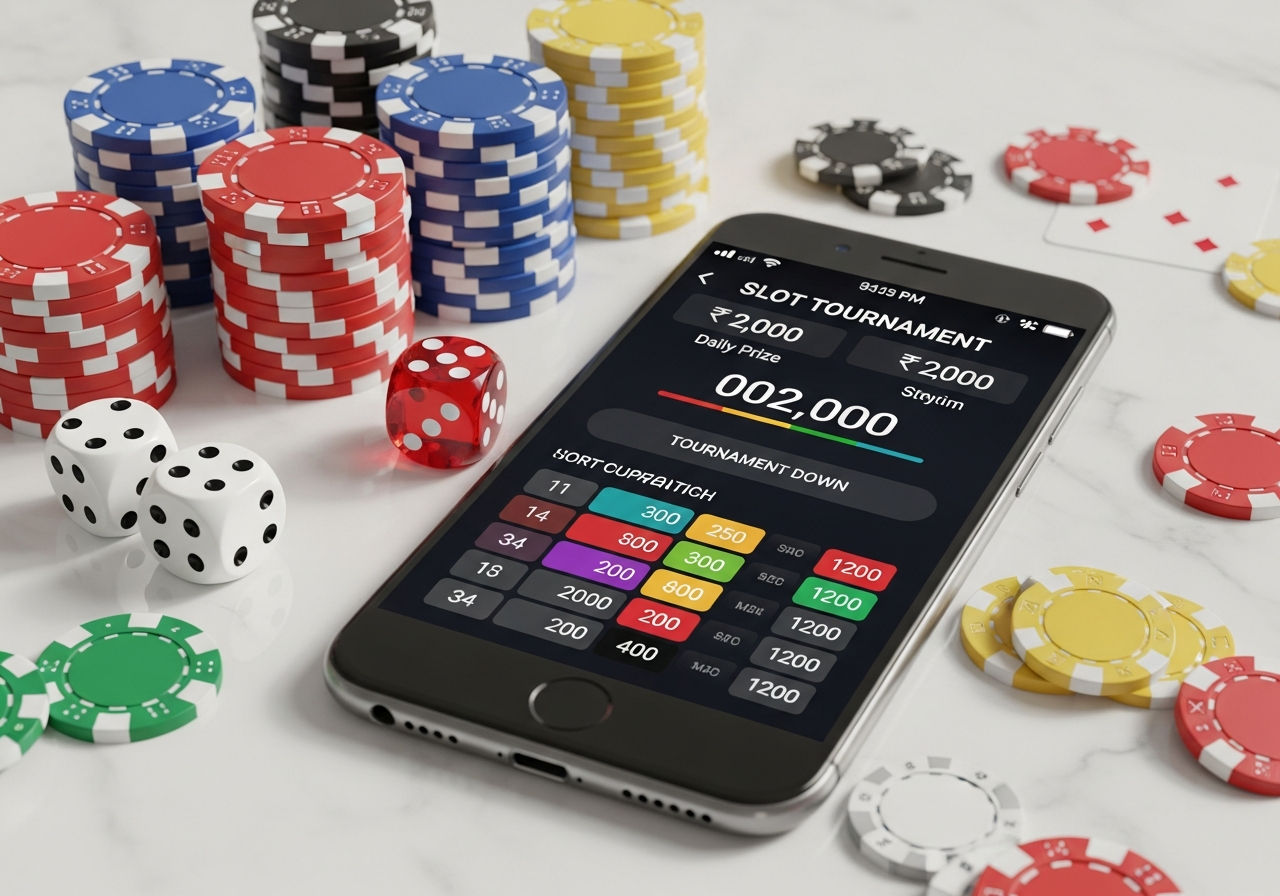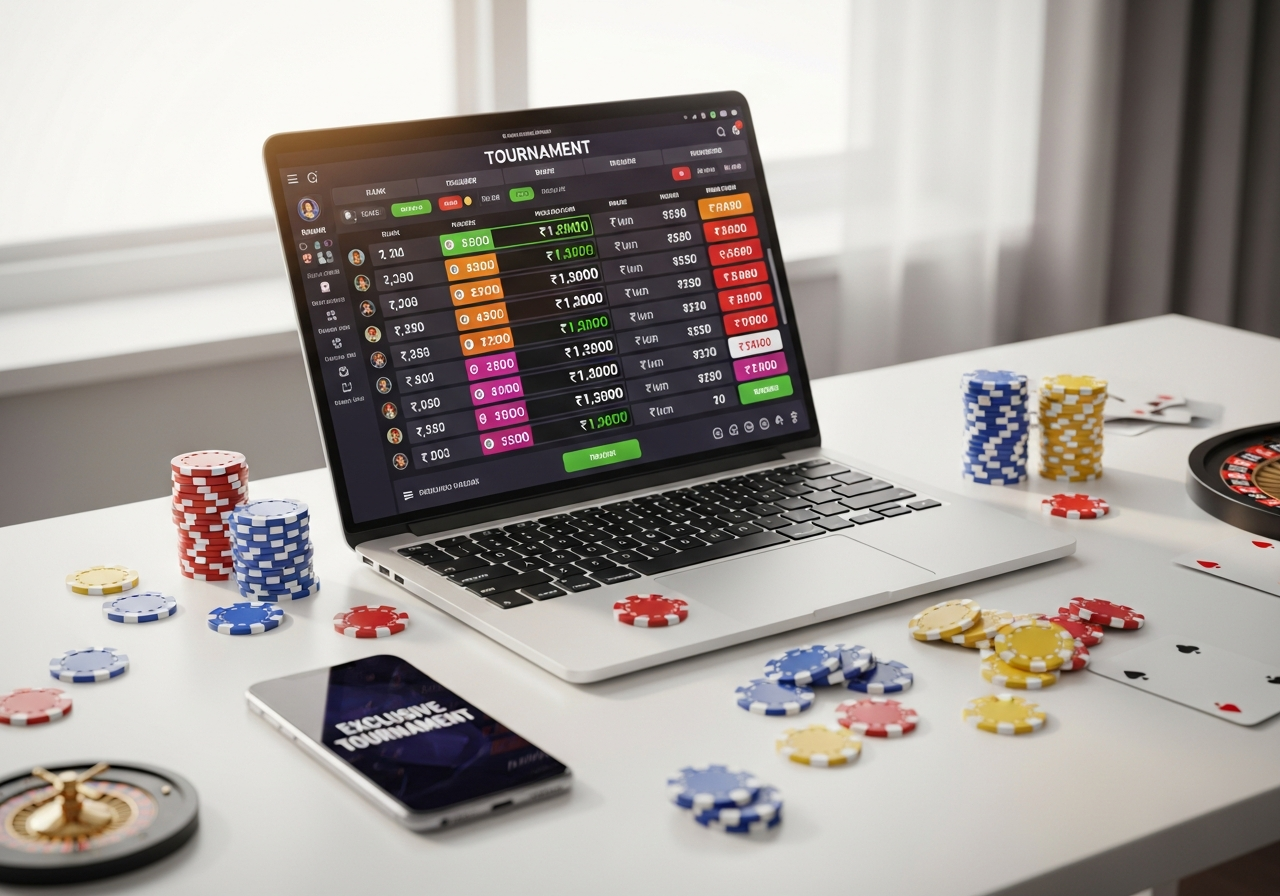

Slot leaderboard tournaments have become one of the most electrifying promotional events at Indian casinos, combining the thrill of slot machine gaming with competitive, real-time rankings. Unlike standard slot play, where outcomes are purely individual, leaderboard tournaments transform the slot floor into a high-energy competition where players compete head-to-head for top positions and prizes. These events are particularly popular at tribal gaming properties and increasingly among India-facing online casinos, where timed competitions, equal starting conditions, and prize-focused play create a fresh, tournament-style experience that keeps players engaged and coming back.
For Indian casino operators, slot leaderboard tournaments serve as powerful tools to drive floor traffic, boost loyalty program participation, and create memorable gaming moments that extend beyond a single machine or session. Whether you’re a casual player exploring tournament play for the first time or a seasoned slot enthusiast looking to understand the mechanics and strategy behind leaderboard events, this guide will walk you through how these tournaments work, what makes them different from regular slot play, and how to maximize your chances of climbing the ranks.
Understanding Slot Leaderboard Tournaments In Indian Casinos
At its core, a slot leaderboard tournament is a timed competitive event where players spin designated machines in tournament mode and accumulate points based on their wins. Unlike regular slot play, where you cash out credits as winnings, tournament play focuses entirely on scoring—your goal is to earn the highest point total and secure the best position on the leaderboard. This fundamental shift transforms the slot experience from a solitary, outcome-focused activity into a social, rank-driven competition.
Indian casinos and online operators use leaderboard tournaments as high-energy promotional events tied to festivals, holidays, VIP programs, and regular weekly promotions. The format appeals to a broad player base because it levels the playing field: everyone starts with the same amount of credits or spins, machines are in tournament mode with no cash-in or cash-out capability, and outcomes depend on both luck and strategic play. The visual element of a live, updating leaderboard—displayed on screens throughout the casino or in the online lobby—adds excitement and encourages continued play as competitors watch their rankings shift in real time.
What Makes A Slot Tournament Different From Regular Slot Play
The differences between regular slot play and tournament play are significant and directly affect how you approach the game. In standard slot play, you insert money or credits, spin the reels, and any wins are added to your machine balance, which you can cash out at any time. Tournament play eliminates this flexibility. When you enter a tournament, you receive a fixed allocation of credits or spins, and these are your only resources for the duration of the event. Your machine is locked in tournament mode, meaning you cannot withdraw cash or add additional funds during play.
Scoring in tournaments is point-based rather than cash-based. Every winning combination, bonus round, or multiplier on your machine is converted into tournament points on a meter. If you win $50 on a particular spin, that translates to 50 points toward your leaderboard ranking, but those points cannot be cashed out as money. Instead, your final placement on the leaderboard determines your prize, which may be cash, free play credits, dining vouchers, or hotel perks—depending on the tournament’s prize structure.
The random number generator (RNG) that powers the slot machine remains unchanged during tournament play. Fair competition does not require casinos to alter the odds or outcomes; instead, tournament mode simply restricts how credits are used and displayed, ensuring all players compete under identical rules and machine settings. This is why leaderboard tournaments are considered fair events that comply with gaming regulations across tribal casinos and licensed online operators in India.
The Role Of Leaderboards In Casino Slot Events
The leaderboard is the visual centerpiece of any slot tournament. Real-time leaderboards displayed on large screens or mobile dashboards create urgency and drive player engagement. When you can see your name climbing the ranks—or dropping as competitors catch up—the psychological effect is powerful. This transparency and social element differentiate tournaments from regular slot play, where your session is isolated from other players.
Leaderboards update at set intervals, typically every few minutes or in real time, depending on the operator’s system. In some tournaments, updates occur only at the end of each round, while others refresh continuously. This cadence affects player behavior significantly: in real-time leaderboards, players often accelerate their pace or take more risks if they’re behind, while in delayed-update systems, players may not realize they’re close to the top position until it’s too late. Indian casinos leverage this psychology to keep the floor active and create memorable moments as the final minutes of a tournament approach.
The leaderboard also fosters a sense of community and friendly competition. Casual players enjoy watching familiar faces or other competitors on the rankings, and many tournaments are designed to encourage social interaction—people gather around leaderboard displays, offer encouragement, or congratulate top finishers. This social gamification is one reason why leaderboard tournaments drive higher lifetime value and loyalty compared to promotional slot play without competitive elements.
Tournament Formats Used By Indian Casinos
Indian casinos and online operators use various tournament formats, each with distinct mechanics around credits, timing, and structure. Understanding these formats helps you choose tournaments that align with your budget and playing style. Below is a breakdown of common formats seen in tribal casinos and India-facing online brands.
| Format | Entry Type (Buy-In/Freeroll) | Credits/Spins Structure | Timing | Typical Use In Indian Casinos |
|---|---|---|---|---|
| Timed Unlimited-Spin | Freeroll or buy-in | Fixed amount of credits; unlimited spins until time expires | 15–60 minutes | Weekly promotions, loyalty events; rewards speed and consistency |
| Fixed-Credit / Fixed-Spin | Buy-in or loyalty-based | Set number of spins (e.g., 50 or 100); must maximize score with limited actions | 5–20 minutes | VIP tournaments, high-engagement events; rewards strategy and bet sizing |
| Multi-Round Qualifier | Buy-in or freeroll | Multiple qualifying rounds; top finishers advance to a final round for larger prize pool | 2–7 days | Major casino events, holiday promotions; builds excitement over time |
| Free-Spin Tournament | Freeroll | Allocated free spins on designated machines; spins cannot be paused or transferred | 10–30 minutes | New-player promotions, weekday slots; low barrier to entry |
| Loyalty-Point Buy-In | Loyalty points (no cash outlay) | Conversion of loyalty points to tournament credits; entry cost varies by VIP tier | Varies by event | VIP and rewards-program events; incentivizes loyalty play |
Timed Unlimited-Spin vs Fixed-Credit Leaderboard Events
Timed unlimited-spin tournaments give you a set amount of time (typically 30–60 minutes) to accumulate as many points as possible. Your credit allocation is large enough that you won’t run out before the timer expires, so the strategy centers on speed, consistency, and maximizing spins per minute. In these events, faster play correlates with higher scores because you get more opportunities to hit winning combinations and bonus rounds.
In contrast, fixed-credit tournaments give you a limited number of spins or a smaller credit allocation, and you must decide strategically how to use them. If you have 100 credits and a 10-minute window, you might choose higher-bet spins to chase bigger wins, or lower-bet spins to maximize the number of attempts. This format rewards decision-making and risk assessment alongside luck. Many players prefer fixed-credit tournaments because they feel more skill-influenced, even though RNG outcomes remain random.
Registration, Eligibility And KYC For Indian Slot Tournaments
Entering a slot tournament involves several steps, especially for online operators and licensed tribal casinos in India. Below is a typical registration and entry process.
- Visit the promotions desk (at land-based casinos) or access the tournament lobby (online) to discover available leaderboard events, entry requirements, and prize information.
- Verify your age and location eligibility by providing a valid government-issued ID. Indian casinos require players to be at least 18 (or 21 in some jurisdictions) and may have residency or membership requirements.
- Complete KYC (Know Your Customer) verification if you are a new player or playing at an online operator. This includes submitting identity, address, and payment information to comply with Indian gambling regulations and anti-money-laundering requirements.
- Check loyalty program status and determine your VIP tier or base points balance, as many tournaments are restricted to players with prior activity or a certain loyalty level.
- Select your tournament entry method: pay a buy-in fee (cash or card), redeem loyalty points, or enter a freeroll event (if eligible).
- Confirm entry details, including the tournament name, start time, machine assignment (if applicable), and your initial credit allocation.
- Receive your tournament credentials (confirmation number or digital ticket) and proceed to your designated machine or online slot interface at the scheduled start time.
Buy-In, Freeroll And Loyalty-Based Entry Models
Tournaments using a buy-in model require you to pay an entry fee—typically ranging from a few hundred rupees to several thousand—to join. The casino collects these fees and allocates a portion (usually 80–90%) to the prize pool, keeping the rest as revenue. Buy-in tournaments attract serious competitors and offer larger prize pools, making them appealing if you want a shot at significant rewards.
Freeroll tournaments have no entry fee and are open to all registered players or specific segments (e.g., new players, loyalty members). These events are funded by the casino’s marketing budget and are used to drive floor traffic and attract new customers. Freerolls are ideal for players testing the tournament format without financial commitment.
Loyalty-based entry models allow players to “buy in” using accumulated loyalty or rewards points instead of cash. This approach incentivizes loyalty program participation and gives high-frequency players a way to compete without additional spending. Many Indian casinos tier loyalty-entry tournaments by VIP level, offering exclusive events and larger prize pools to elite members.
Eligibility Rules In Indian Casino And Online Contexts
Eligibility for Indian slot tournaments is governed by local gaming laws, tribal gaming regulations, and operator house rules. All players must be at least 18 years old (or 21 in some states) and must comply with the specific jurisdiction’s residency or membership requirements. Online operators also mandate KYC verification to ensure compliance with Indian gambling regulations, anti-money-laundering standards, and tax reporting.
Some tournaments are restricted by tier: VIP members may have exclusive access to high-prize-pool events, while casual players enter standard leaderboard competitions. Operators may also gate entry through minimum prior play, requiring you to have wagered a certain amount or held an account for a specific duration before entering premium tournaments. Always review the specific eligibility terms posted at the promotions desk or in the online tournament lobby before registering.
How Scoring And Leaderboards Work In Slot Tournaments
Scoring is the foundation of any slot leaderboard tournament. Understanding how points are calculated, how leaderboards are updated, and how multi-round formats accumulate scores is essential to interpreting your position and estimating your final ranking.
| Scoring Method | What Counts As Points | Impact On Leaderboard | Common Use Case |
|---|---|---|---|
| Win-Based (Per Spin) | Credits won on each spin; multiplier symbols boost point value | Every winning spin instantly increases your score; bonus rounds generate large point jumps | Most timed unlimited-spin tournaments; rewards consistency and luck |
| Multiplier Scoring | Base win amount × multiplier (e.g., 2x, 5x, 10x for bonus features) | A single bonus feature can catapult you up the leaderboard | Tournaments on high-volatility or feature-rich slots; emphasizes big-win chasing |
| Round-Based Accumulation | Total points from a single round; best round counts, or all rounds are summed | Your position depends on whether consistency or a single hot round is rewarded | Multi-round qualifiers and extended tournaments spanning hours or days |
| Tier-Based Point Allocation | Different winning combinations (small wins = 1 point; bonus = 50 points) | Creates strategic betting; large-bet spins risk more but award more points per win | Mixed-format tournaments; can reward both speed and risk-taking |
Single-Round vs Multi-Round Accumulated Scoring
In single-round tournaments, you play once for a fixed duration (e.g., 30 minutes), and your final score determines your ranking. This format is straightforward and suits players who prefer short, intense competitions. Your best moment can win the tournament, but a rough start is difficult to overcome.
Multi-round tournaments span multiple sessions or days, with several qualifying rounds leading to a grand final. In this format, you may play three separate 20-minute rounds over a week, and the system either counts your best single round or accumulates all points. Accumulated scoring rewards consistency and requires sustained focus over time. Best-round scoring allows you to have an off day without being eliminated, making multi-round tournaments more forgiving for casual players.
Prize Pools, Payout Structures And Rewards In Indian Casinos
Prize pools in Indian casino slot tournaments vary widely based on entry fees, participation levels, and operator budget. A buy-in tournament with 100 participants paying ₹1,000 each generates a ₹100,000 pool (assuming 90% payout), while a freeroll event may have a fixed ₹50,000 prize pool allocated by the casino. Most operators pay multiple positions—often the top 5, 10, or 20—rather than only awarding the winner, ensuring more players walk away with rewards and maintaining positive word-of-mouth.
| Prize Type | Typical Amount/Value | Positions Paid | Funding Source | Notes For Indian Operators |
|---|---|---|---|---|
| Cash Prize | ₹5,000–₹500,000+ (varies by tier) | Top 1–5 positions | Buy-in fees, casino budget | Subject to taxation; larger amounts require withholding |
| Free Play Credits | ₹2,000–₹50,000 in bonus or free-play form | Top 5–20 positions | Casino budget | Non-withdrawable, must be wagered on eligible games; encourages return play |
| Free Spins | 50–500 spins on designated slots | Top 10–30 positions | Slot supplier partnerships, casino budget | Tied to specific machines; attracts players to featured games |
| Dining & Hotel Vouchers | ₹3,000–₹25,000 in property credits | Top 10–25 positions | Property partnerships, on-site revenue | Keeps winners on property and generates ancillary revenue |
| Loyalty Bonus Points | 5,000–50,000 points | Top 20–50 positions | Loyalty program budget | Encourages sustained engagement; converts to free play or tier progression |
Top-Heavy vs Flat Leaderboard Prize Distributions
Top-heavy distributions concentrate rewards in the top 1–5 positions, with the winner receiving 30–50% of the total prize pool. This approach appeals to competitive, high-risk players and creates a “winner-take-most” dynamic. A ₹100,000 pool might be split as ₹50,000 (1st), ₹30,000 (2nd), ₹15,000 (3rd), and ₹5,000 (4th). Only the most skilled or luckiest players are rewarded, making these tournaments exciting but risky.
Flat distributions spread rewards across 20–50 positions, with more modest per-position payouts. A ₹100,000 pool might give ₹5,000 to each of the top 20 finishers. This approach attracts casual players because the barrier to a prize is lower—you don’t need to dominate; you just need to finish in the top 20. Flat distributions generate higher overall participation and are common in freeroll tournaments aimed at audience building.
Non-Cash Rewards: Free Play, Dining And Stay Packages
Indian casinos frequently award non-cash prizes because they generate on-property revenue and encourage return visits. A ₹10,000 free-play credit is worth ₹10,000 in casino revenue if redeemed through wagering, but may cost the casino only ₹7,000–₹8,000 in expected losses (due to the house edge). Dining vouchers and hotel packages similarly incentivize winners to spend additional time and money at the property.
Free-play credits are the most common reward because they directly drive slot play. A tournament winner receiving ₹20,000 in free play on slots must wager it according to the promotion’s terms (e.g., play through the amount once or twice on eligible games). This generates sustained machine play and keeps the player engaged long after the tournament ends. Free spins are similarly effective, tying the winner to specific new or featured games that the casino wants to promote.
Fairness, RNG And Regulation In Indian Slot Leaderboard Events
A critical question players ask is whether leaderboard tournaments are fair. The answer is yes, under proper regulatory oversight and operational controls. Tournament mode does not alter the random number generator; it only restricts credit flow and displays scoring differently. Every player’s machine uses the same RNG and pay table as standard slot play, meaning outcomes are determined purely by chance, not by casino manipulation or player skill.
- Tournament mode disables cash-in and cash-out functions, preventing fraud or unintended deposits.
- Fixed credits or spins are allocated at tournament start, ensuring all players have identical bankrolls and preventing advantage through additional funding.
- Countdown timers enforce uniform play duration, so no player receives extra time to accrue more spins or points.
- Scoring calculations are automated and logged, with no manual adjustments based on player identity or history.
- Real-time leaderboard updates prevent collusion, as all players can see current rankings and know their standing.
- Audit trails and machine records document all tournament play, enabling auditors to verify fairness and compliance with regulations.
- Third-party certification (common among online operators and licensed tribal casinos) validates that tournament software and RNG meet industry standards.
How Tournament Mode Works On Slot Machines
When a slot machine is placed into tournament mode, the underlying RNG continues to operate normally. What changes is purely operational: the machine no longer accepts currency or coins, and the touchscreen or button interface prevents withdrawal requests. Credit balances are tracked on a separate tournament meter rather than the standard machine balance, and a countdown timer is displayed prominently.
At the tournament’s conclusion, the machine automatically exits tournament mode and returns to standard operation. Player tournament credits expire and cannot be carried forward; they exist only for the duration of the event. This design ensures that tournament play is isolated from regular slot activity, protecting the integrity of both formats and preventing confusion or fraud.
Player Strategy For Climbing Slot Leaderboards In India
While slot outcomes are determined by random chance, your tournament placement depends not only on luck but also on how strategically and efficiently you use your time and credits. The following tips address format-specific tactics and mental game aspects that can help you optimize your tournament performance.
- In timed unlimited-spin tournaments, prioritize speed and consistency. The more spins you complete, the more opportunities you have to hit winning combinations. Avoid long pauses between spins, and focus on executing spins quickly without rushing to the point of errors.
- In fixed-credit tournaments, choose your bet size strategically. Higher bets generate larger point payouts per win but deplete your credit allocation faster. If the tournament allows machine selection, consider the volatility: high-volatility slots offer larger individual payouts but longer dry spells, while low-volatility slots provide frequent small wins that add up over time.
- Study the leaderboard and adjust your pace accordingly. If you’re far behind with limited time remaining, consider higher-bet spins to chase a big win. If you’re ahead, continue steady play to protect your position without unnecessary risk.
- Manage your mental focus and energy. Tournaments can be intense and tiring, especially longer events. Take brief pauses if allowed, stay hydrated, and maintain concentration on the game rather than obsessing over leaderboard movements.
- Understand the prize structure and your realistic goals. If only the top 3 positions are paid and you’re ranked 15th with 10 minutes left, the mathematical probability of catching up may be low. Manage expectations and avoid reckless play driven by frustration.
Time Management, Bet Sizing And Volatility Choices
Time is your most valuable resource in any timed tournament. Calculate your approximate spins per minute based on the machine’s speed and your playing rhythm, then estimate how many total spins you’ll complete. In a 30-minute tournament at an average of 10 spins per minute, you’ll have approximately 300 spins. Knowing this helps you decide whether to pursue many small-bet spins (consistency strategy) or fewer high-bet spins (variance strategy).
Bet sizing directly affects your point accumulation. A low-bet spin might win 10 credits (10 points), while a high-bet spin on the same winning combination yields 50 credits (50 points). The tradeoff is sustainability: high bets empty your credit allocation quickly, leaving you fewer spins if you hit a cold streak. Low bets stretch your credits further but require more spins to accumulate the same total score. The optimal choice depends on your risk tolerance, the remaining time, and your current leaderboard position.
Volatility refers to the variance in a slot’s payout pattern. High-volatility slots (often with progressive jackpots or feature-heavy games) deliver large payouts infrequently but spectacular win amounts when they do. Low-volatility slots provide frequent small wins. In a time-pressured tournament where you can select machines, high-volatility slots are tempting because a single big win can vault you up the leaderboard. However, they risk leaving you with no points if features don’t trigger. Low-volatility slots guarantee steadier point accumulation but are capped in maximum upside.
Mental Game: Focus, Pace And Avoiding Distractions
The mental aspect of tournament play is often underestimated. High-paced, competitive play over 30–60 minutes is cognitively demanding. Maintain focus by avoiding distractions: don’t chat with nearby players, minimize glances at the leaderboard screen (check periodically, not constantly), and keep your attention on executing each spin efficiently.
Pace management is crucial. Playing too fast increases mistakes, fumbled button presses, and decision fatigue. Playing too slow forfeits valuable spins. Find a rhythm that feels natural and sustainable for the tournament duration. If you’re climbing the leaderboard near the end of the tournament, resist the urge to panic and throw caution away; steady play is more reliable than desperate high-risk moves.
Finally, remember that tournaments are entertainment, not a guaranteed profit opportunity. Variance is high, and luck plays a dominant role. Approach each tournament with a goal (e.g., “have fun and try to place in the top 10”) rather than an expectation (e.g., “I must win this tournament”). This mindset reduces stress, improves decision-making, and makes the experience more enjoyable regardless of outcome.
Why Indian Casinos Use Slot Leaderboards: Marketing And Player Experience
From the operator’s perspective, slot leaderboard tournaments are sophisticated marketing and retention tools. They generate floor traffic, extend player visit duration, boost slot machine revenue, and create loyalty program engagement. Here’s why they are so effective:
| Aspect | Benefit For Casino | Benefit For Players | Potential Downsides |
|---|---|---|---|
| Traffic & Dwell Time | Promotes off-peak play; extends average visit | Structured, time-limited event creates urgency and memorable experience | Crowd congestion during tournaments may make machines difficult to access |
| Loyalty Integration | Gates entry by tier; incentivizes loyalty program enrollment and sustained play | Exclusive access for VIP members; rewards frequent visitors with better odds or larger pools | Casual players may feel excluded if tournaments are VIP-only |
| Marketing Reach | Tournaments tie into seasonal promotions (festivals, holidays); generate social buzz and word-of-mouth | Excitement and competition create compelling stories; top finishers become “celebrities” on-property | High-frequency promotion fatigue if too many tournaments dilute perceived value |
| Ancillary Revenue | Winners’ non-cash prizes (dining, hotel) drive on-property spending; buy-in fees fund tournaments | Dining/stay prizes extend value beyond the casino floor; free play encourages return visits | Non-cash prizes require winners to spend time on-property, potentially limiting flexibility |
| Player Data & Engagement | Tournaments generate granular behavioral data; segment players by tournament participation | Leaderboard competition and social comparison drive continued engagement | Over-reliance on leaderboards may encourage overspending by competitive players |
| RTP & Revenue Control | Tournaments control payout amounts and timing; prize pool is fixed regardless of RNG variance | Transparent prize allocation removes uncertainty; you know the maximum prize from the start | Non-withdrawable play credits reduce immediate payout and encourage on-property spending |
Responsible Gambling And When To Skip A Slot Tournament
While slot tournaments are entertaining and can be a fun way to compete with other players, their high-intensity pacing and competitive structure can encourage overspending if you’re not disciplined. Here’s how to approach tournaments responsibly:
Set a personal budget for tournament entry fees before arriving at the casino or opening the online platform. Decide in advance how much you’re willing to spend on buy-ins, and stick to that amount regardless of past losses or the excitement of an upcoming event. Treat tournament losses as entertainment expenses, not investments to be recouped.
Be aware that tournament scoring is addictive. Watching your points climb in real time, seeing your name move up the leaderboard, and the competitive pressure from other players can create an urge to enter additional tournaments or increase bet sizes beyond your comfort level. If you find yourself regularly entering more tournaments than planned or betting more than you intended, take a step back.
Skip tournaments if you’re experiencing emotional stress, financial pressure, or gambling urges outside your normal patterns. Tournaments should enhance your casino experience, not dominate it. If you’re chasing losses, betting to recover previous tournament defeats, or entering consecutive tournaments without breaks, these are signs that tournament play has crossed from entertainment into problem behavior.
Utilize responsible gambling tools available at casinos and online operators: set deposit limits, loss limits, or session time limits. Many properties offer free counseling or Gamblers Anonymous resources. In India, organizations like the All India Gaming Federation and state-level gaming commissions provide resources and support.
Remember that slot tournaments, like all gambling, are games of chance. The house edge exists in tournament mode just as it does in regular slot play. Your participation should be driven by the enjoyment of competition and entertainment value, not by the expectation of profit or a way to solve financial problems.
Slot leaderboard tournaments represent a dynamic evolution of traditional slot play, blending the randomness of slots with the structure and social appeal of competitive gaming. Whether you’re drawn to the thrill of climbing a real-time leaderboard, the appeal of multiple prize-winning positions, or simply the novelty of a tournament format, these events offer Indian casino players a fresh and engaging experience. By understanding the mechanics, formats, scoring systems, and strategy considerations outlined in this guide, you’re better positioned to enter tournaments confidently, manage your bankroll responsibly, and maximize your enjoyment of this exciting gaming format.